The In-Between Space: Why a Deep Window Reveal Deserves Your Attention
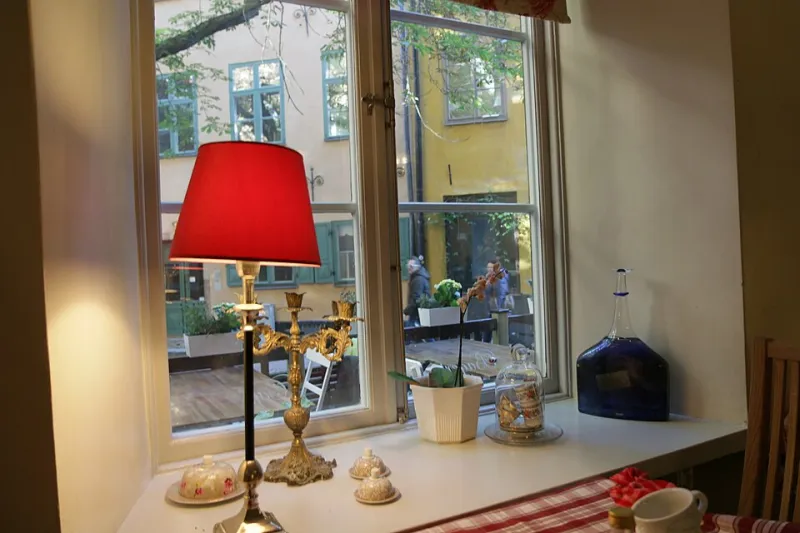
Photo: Øyvind Holmstad, CC BY-SA 4.0, via Wikimedia Commons
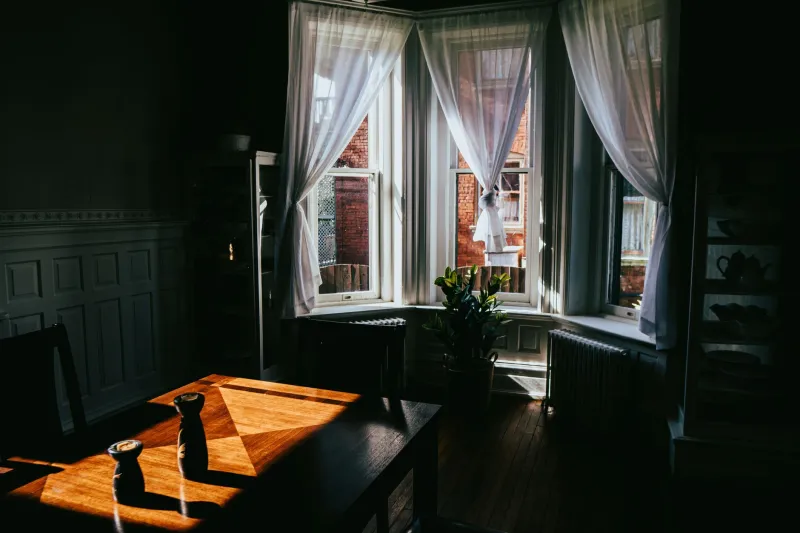
In an older UK home, the walls are often thick enough to give a window a sense of occasion. The glass sits back from the room, and in that gap between brickwork and daylight you get a small, useful, oddly architectural space: the reveal. It is the painted return at each side, the underside of the lintel, and the sill itself. Georgian, Victorian and Edwardian houses built plenty of them, and even some twentieth-century homes have more depth than we give them credit for. Yet we tend to treat the whole area as something to be covered up. A deep reveal is not a problem to solve with a pair of floor-length curtains. It is one of the few bits of character your house already owns.
Start with the sides, not the sill
Most of us focus on the sill because that is where the clutter lands. The sides do more work. They frame the view, bounce light into the room and give a window its weight. If they are painted the same colour as the wall, the window reads as a calm recess. If they are picked out in a slightly deeper tone, the reveal becomes a deliberate feature. Neither is wrong; it depends on how much attention you want the window to take.
For practical purposes, use an eggshell or a durable water-based paint on the returns. Bathrooms and kitchens aside, window reveals collect condensation, dust and the occasional cobweb, so a finish you can wipe is sensible. Do not skip the underside of the reveal, especially on south-facing windows where the light can make a poorly painted edge look chalky. A small foam roller and a decent brush for the corners will do more for the room than a new blind.
Shutters, simple blinds and the case against over-dressing
Heavy curtains have their place, but they can swallow a deep reveal whole. If you want to keep the architecture visible, think about what sits inside the recess rather than what hangs over it. Café-style shutters, tier-on-tier shutters or a simple linen Roman blind fitted within the reveal all let the window keep its shape. Shutters are the obvious choice in period homes, but they are not cheap. A plain roller blind in a warm neutral, mounted inside the recess, is a budget-friendly compromise that still leaves the sill and sides on show.
If drilling is not an option, tension rods can work in a shallow recess for a lightweight café curtain, though they are less reliable in very deep openings. The point is not to ban curtains. It is to avoid the default move of hanging a heavy pair across the whole wall and losing the very detail that makes the window feel old.
A seat, a shelf or a radiator—choose carefully
A deep sill invites a window seat, and in a bay or a broad landing window it can be the best seat in the house. You do not need a joiner to make it work. A slim bench, a low ottoman or a built-in-looking box painted to match the wall can all sit under the window without pretending to be original. Allow roughly 45–50cm of depth for comfortable seating, and leave a gap at the back for air to move.
Radiators are the awkward bit. Many period homes have a radiator parked under the window, which is efficient but fights the idea of a seat. Do not box it in tightly or pile cushions against it. If you want a bench above, leave clearance and use a slatted top so heat can rise. Reflective radiator panels behind the unit are a cheap, unglamorous win, and a simple shelf above the radiator can turn the sill into a display ledge without blocking warmth. If the radiator is genuinely in the way, a slim vertical model moved to a side wall is a bigger job—but it is worth costing before you build around a problem.
Plants, lamps and the art of not cluttering
A deep reveal is a stage. It does not need a full cast. One decent fern, a small collection of stones or a single ceramic pot will do more than a row of tiny ornaments. North-facing reveals suit ferns, ivy and peace lilies; sunny sills are better for succulents and herbs, though watch for scorching in summer. In winter, a small battery-powered lamp on the sill adds a lovely low glow without trailing cables across the paintwork. If you have a socket nearby, a slim table lamp can make the window feel like a room within a room.
Keep the sill clear enough to open the window and clean the glass. That sounds obvious, but a deep sill is a magnet for post, keys and half-finished cups of tea. A shallow woven tray can contain the mess without hiding the surface.
When the windows are modern
Plenty of period homes have replacement windows set closer to the internal face of the wall, leaving a shallow reveal where there used to be depth. You cannot fake thick masonry, but you can soften the transition. A deeper sill board, a simple architrave and a shutter frame fixed inside the opening can all suggest depth without looking dishonest. Avoid adding fake beams or elaborate mouldings that pretend to be original. The aim is to make the window feel settled, not to stage a period drama.
A quick audit before you spend
Run a hand around the reveal on a windy day. If you can feel cold air, deal with draughts before you dress the window. Check for condensation, flaking paint and blocked trickle vents. A deep reveal is a lovely thing, but it is still part of the building envelope. Fix the small stuff first, then paint, then dress. The result is not a renovation. It is the quiet correction of a space you already had.