The Quietest Upgrade in the House: Auditing Your Interior Doors, Room by Room

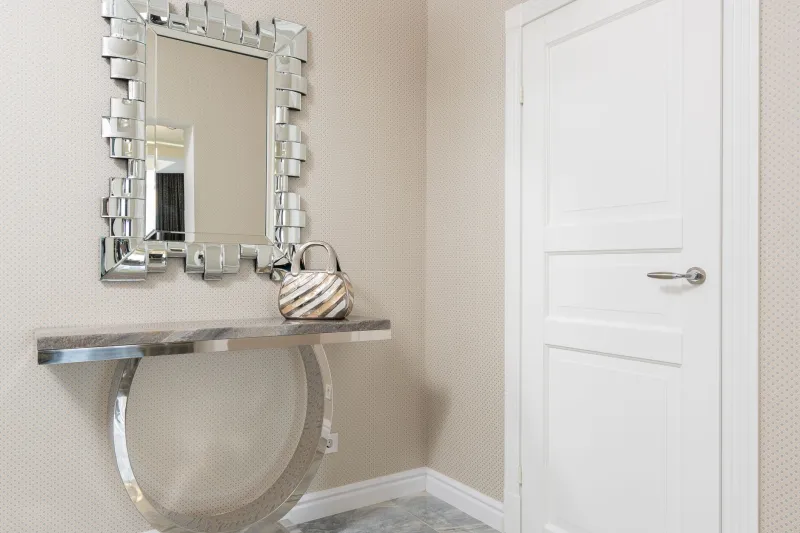
Photo: Victorian four panel painted interior door brass handle hallway, via tattoobookmarks.com
You will walk through your interior doors about forty times today. You will look at roughly none of them. That is the odd thing about doors: they are the most repeated object in the house and the least examined. We agonise over paint colours and lampshades while a set of flimsy hollow-core slabs quietly drains the character out of every room they open into.
So before you order a single tester pot in 2026, spend an afternoon on an audit. It costs nothing, it takes about two hours, and it will tell you more about your house than any surveyor's report.
Start with a clipboard and a bit of honesty
Walk the house and list every internal door. For each one, note four things: the approximate age, the material, whether it still has its original hardware, and whether it actually closes properly. Do not skip the airing cupboard, the understairs store or the door to the garage. Small doors are still doors, and a mismatched pair at the end of a hall is more visible than you think.
You will probably find three types. Genuine originals that have survived a century. Mid-century or 1980s replacements fitted during a previous owner's renovation blitz. And the odd oddity, usually a bathroom door someone swapped in a hurry. Most UK homes are a mix, and that mix is exactly what makes an audit worthwhile.
How to tell an original from an impostor
Age is mostly in the detail. A Victorian terrace will usually have a four-panel door, often with a pair of tall upper panels and a pair of shorter lower ones, hung on brass butts with a mortise lock. A 1930s semi tends to have a six-panel arrangement, thinner in section, sometimes with Bakelite handles and a small glazed panel or a fanlight above.
Look at the thickness. Genuine period doors are usually a proper 44mm or more and feel heavy on the hinge. Run a knuckle along the panel edges, which should be moulded rather than flat. Check the keyhole. If there is an old mortise cut that has been filled and painted over, or a pair of hinge positions that no longer line up with the current hinges, that door has history. If it is 35mm thick, flat-faced and light enough to carry under one arm, it is a modern replacement, whatever colour it is painted.
One warning: in any house built before roughly 1960, assume old paint layers may contain lead. Do not dry-sand. Use a chemical stripper, a heat gun on low with ventilation, or simply paint over it with a decent primer and move on.
Hardware is the best character per pound in the house
You can change the entire personality of a door for the price of a takeaway. Swap a cheap chrome lever for a brass lever on a raised rose, or a blacksmith-style thumb latch on a cottage door, and the room shifts. Keep a rough era discipline: Georgian and Victorian doors suit brass and black iron, 1930s doors suit Bakelite and simple brass, and 1970s doors suit a skip.
Replace the hinges at the same time. A pair of solid brass butts costs very little and stops the door sagging against the frame. If a door drags, it is usually hinges rather than the door itself. And do match the escutcheon to the handle, because nothing looks more defeated than a lovely brass knob above a plastic keyhole cover.
Paint decisions that actually matter
Gloss is not the villain it has been made out to be, but for interior doors in a busy family house, a mid-sheen eggshell is more forgiving and flatters old mouldings better. Where the panels are deep and lovely, a full gloss on the mouldings with eggshell on the flats is a traditional trick worth stealing.
If you want a corridor to feel deliberate rather than stitched together, colour-drench the doors, frames and architraves in the same shade as the walls. It is free to do and it makes an awkward landing look intentional. Do not, however, paint over original brass hardware, and do not fill every historic hinge mark just because it is quicker than making good.
Glazing, fanlights and borrowed light
Over-door fanlights and small glazed panels are quietly valuable. They borrow light from a hall into a dark landing, and they are a period detail that modern doors almost never replicate. If yours has been painted shut or boarded over, opening it back up is often an afternoon's work. Where privacy is needed, reeded or softly obscured glass keeps the light and loses the view.
For heat loss with single glazing, secondary glazing film on the room side is the cheap fix, and a well-fitted curtain or a decent door curtain on an external-feeling hall door does more than people expect.
Salvage yards: where the good doors went
Architectural salvage yards are full of decent original doors pulled out during 1980s and 1990s refits, and prices vary wildly with demand. Expect anything from about 30 to 200 pounds depending on condition, age and how charming the owner is feeling. Take a tape measure and take it seriously, because door sizes in older houses are imperial and unforgiving. A 2'6" by 6'6" opening will not accept a metric door without work.
Check for rot at the bottom rail, woodworm in the stiles, and warp, which is much harder to fix than a bit of rot. Hold a straight edge against the door face. And before you buy, check the door lining in your own house, because a beautiful reclaimed door in a twisted frame is a problem you have bought rather than solved.
What to do with a hollow modern door
You do not have to replace every door in the house. The quickest upgrade is to add simple panel mouldings to a flat hollow door: MDF beading cut to a rectangle, glued and pinned, then filled and painted, gives an instant panelled look for a few pounds per door. It will not fool anyone up close but it reads correctly from across a room.
If sound is the real issue, in a bedroom or between a living room and a hall, hollow doors are the worst offender in the house. A solid-core replacement blank costs around 60 to 120 pounds and will do more for your sleep than any rug.
Best of all, fix what already exists. Silence the slam with a cheap latch adjuster, replace a worn strike plate, and stop the door catching on the carpet. A house that closes quietly feels cared for, and that is half of what we mean by charm.