Rooms With Edges: Why a Corridor Can Be the Making of a UK Home
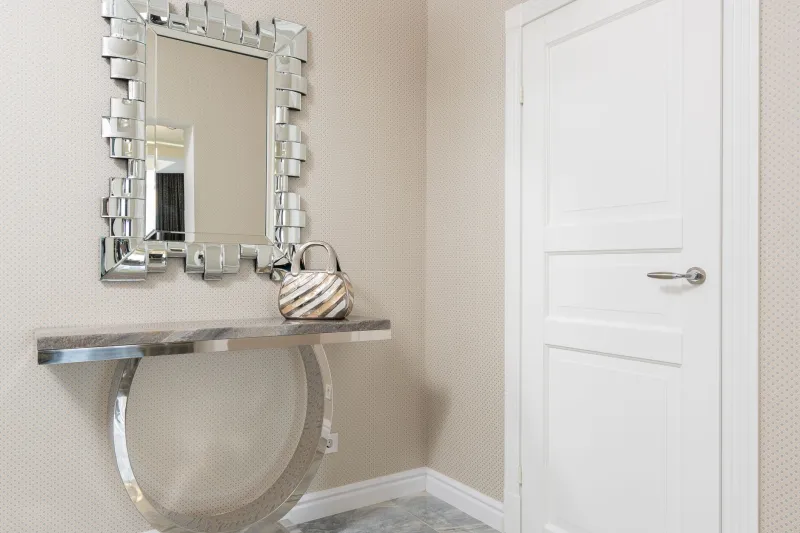
There is a particular moment in every open-plan conversion when someone says the words flow and everyone nods. Flow is lovely. But flow is not the only thing a home can do. A little corridor, a doorway you have to turn through, a glimpse of the sitting room before you enter it: these are not wasted square metres. They are the punctuation marks that make a house readable. In 2026, with so many UK homes still carrying the fingerprints of the knock-through era, it is worth asking whether the most charming move is sometimes the one that leaves a wall alone.
The case for a little punctuation
British homes have a long love affair with small rooms. The vogue for removing every wall gathered pace in the 1990s and 2000s, and it gave plenty of families light and space. But it also stripped out something harder to price: the sense of arrival. A hall is not just a place for shoes. It is a deep breath between the street and the sofa. A corridor can separate noise from rest, keep warmth where you want it and give a modest terrace a bit of ceremony. Open plan can be brilliant for some households. It should not be the default for every one.
If you cannot or will not undertake structural work, you are not stuck with a house that feels like one long shrug. You can reintroduce zoning at eye level, floor level and ceiling level. You can make a room feel enclosed without building a room. The aim is not to recreate a Victorian plan exactly. It is to give the house some edges again.
Paint the transition, not just the room
Zoning without walls starts with colour. Treat the hall as its own room rather than a passage. A mid-tone or deeper shade on the hallway walls can make the sitting room beyond feel lighter and more inviting. Repeat that hall colour on the inside of the front door, the architraves or a slim console, and the transition starts to look deliberate rather than accidental.
Colour drenching a small hall can work beautifully, especially if the ceiling and woodwork join in. It makes a narrow space feel intentional. In the sitting room, choose a softer or warmer tone so the change in colour does the work a doorway used to do. Avoid a sharp white line at every edge if you want a calmer result. Test patches on old walls first, because period plaster has opinions.
Light in layers
Corridors often fail because they are lit like afterthoughts: one pendant, one shadow, one forgotten corner. Use wall lights, a picture light over a print, a low lamp on a console and a warm bulb at around 2700K. If you cannot add sockets, battery-powered picture lights and rechargeable table lamps are now good enough to be genuinely useful.
Layered light does more than make a hall look pretty. It slows you down. It gives the arrival a bit of theatre. A low glow in the hallway and a warmer pool of light in the living room create a boundary your eye understands, even if your feet keep walking.
Let doors do some work
Original doors are character in solid form. If yours are still there, repair them, rehang them and add draught-proofing rather than swapping them for hollow replacements. A glazed internal door can borrow light without opening up the plan. If privacy is the issue, an internal curtain or a half-glazed door can soften the division without making the room feel sealed off.
If a door has been removed, a second-hand period door is often cheaper than structural work and much more charming than a gap. Match the architrave, sort the latch and paint it with the room rather than against it. Small joinery decisions like this are the quiet backbone of period character.
Furniture as gentle walls
You do not need a stud wall to make a zone. A slim console, a bench, a rug or a bookcase placed perpendicular to a wall can create a snug without building one. An armchair at an angle can mark the edge of a sitting area. A sofa with its back to a walkway can define a room within a room, provided you keep a clear route around it.
Use rugs to gather furniture. Use a runner in the hall to pull the eye forward. Use a shallow cabinet to hold the things that would otherwise colonise every surface. The trick is to leave enough breathing room. A corridor should feel like a corridor, not a storage unit with a draught.
Storage with a sense of arrival
Hall storage can be the difference between charm and chaos. A shallow shoe cabinet, a row of hooks, a basket for gloves and a bench with space underneath will do more for a period home than a dramatic feature wall. Paint the storage the same colour as the wall so it recedes. Keep radiators clear. A boot-room mood in a small hall is one of the most useful character upgrades you can make.
The charm test
Stand in the doorway of each room and ask whether it feels like a room or a leftover. If the answer is leftover, add an edge: a change of colour, a lamp, a door, a rug, a piece of furniture that knows its job. You do not need to undo a previous renovation to make a house feel more characterful. You just need to give it a few more pauses.