The Other Front Door: Quiet Character at the Back of the House
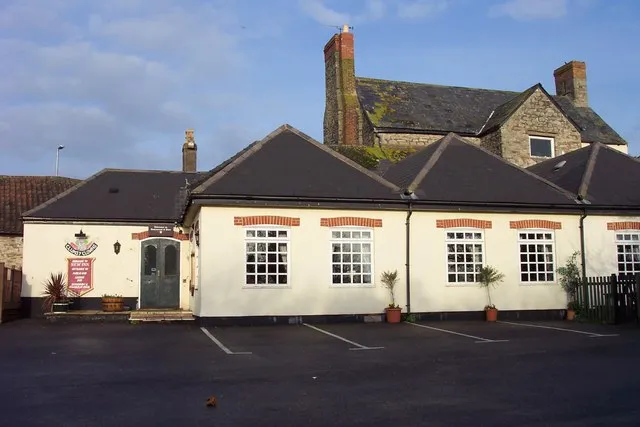
Photo: Jonathan Billinger, CC BY-SA 2.0, via Wikimedia Commons
The front of a UK house is trained to behave. It has a door colour, a doormat, a hanging basket and a certain look of reassurance. The back is where the house lets its hair down, and often it looks like it. There is the rear extension with its flat roof and bi-fold doors, the plastic back door that has gone chalky, the drainpipe, the wheely bin, the pots that have seen better days. It is practical, but it is also an elevation. You see it from the kitchen every morning, from the end of the garden on a summer evening, and from the patio when you are pretending not to notice the weeds.
The good news is that the back of a house responds very well to small, cheap moves. You do not need to render, rebuild or add a pergola with a lighting scheme. You need to treat the rear elevation as a front door that happens to face the garden. Once you do, the whole house feels more considered.
The back door is still a front door
Start with the door itself. It is the focal point of the elevation, even when it is a humble half-glazed number from a DIY shed. If it is wooden and sound, paint it. If it is uPVC, check with the manufacturer or use a specialist uPVC paint, and do not paint over seals or moving parts. Choose a colour that has a bit of nerve but still belongs to the house. Deep green, oxblood, ochre, slate blue or a warm off-black all work well against brick and render. Avoid a colour that only looks good in a magazine; test a patch in the actual light.
A back door also deserves door furniture that matches the front. A decent handle, a house number or a small sign, a boot brush, a hook for the dog lead. These are tiny things, but they make the door look intentional rather than borrowed from a shed. If the door has a step, make sure it is safe and clean. A loose slab or a wobbly threshold undermines all the paint in the world.
Read the elevation before you decorate it
Stand at the end of the garden and look back at the house. What are the main shapes? A rectangle of render, a band of brick, a run of glazing, a drainpipe, a gutter. You are not trying to hide these things. You are trying to give them a bit of rhythm. Repetition helps: the same pot repeated, the same colour on the door and the window frames, a line of trellis that follows the top of a fence. Clutter is the enemy. Three well-chosen things will do more than fifteen random ones.
If the extension is plain, do not fight it. A plain wall is a backdrop. Use it for a climbing plant, a wall light, a bench, a row of hooks for garden tools. If the wall is brick, let the brick be the character. Add a simple metal trellis and a climber that suits the aspect. If it is rendered and painted, keep the paint fresh and choose a door colour that picks up a tone from the garden.
Trellis, pots and the discipline of repetition
Trellis is one of the cheapest ways to soften a rear elevation. It can be wooden or metal, fixed to the wall rather than the door, and used to support jasmine, clematis, climbing roses or a simple annual like sweet peas. Check that it does not block vents or airbricks. Keep it simple: a rectangle of trellis beside the door, or a run above a low wall, is enough. You do not need to cover the whole house in lattice.
Pots are the other great leveller. Choose a colour and stick to it: terracotta, zinc, dark grey, olive green. Buy the biggest pots you can afford and fill them with plants that will survive your level of attention. Bay, rosemary, box, ferns and ornamental grasses are all forgiving. Group them in odd numbers, vary the heights, and leave space between them so they do not look like a car boot sale. If you have a step, put a pot on each side. If you have a corner, put a tall pot there. Repetition makes a plain elevation look designed.
Light the back at dusk
Outdoor lighting is where the back of a house can go from ordinary to quietly lovely. You do not need a full garden lighting scheme. A warm wall light beside the back door, a couple of spike lights in the border, a string of festoon lights under a pergola or along a fence. Choose warm white, not cool white. Solar lights have improved enormously and are fine for marking a path or lighting a pot. Battery-powered lamps can be brought out for an evening and taken in again.
The aim is not to flood the garden. It is to make the house look as if it is inviting you out. Light the door, light the step, light one tree or one pot. Leave some darkness. A garden that is too brightly lit looks like a car park. A garden with a few warm pools of light looks like somewhere you might sit with a glass of something.
Dress the glazing, not just the glass
Rear extensions often have a lot of glass, which is lovely in the day and a bit naked at night. You do not need heavy curtains. A simple roller blind, a Roman blind in a washable fabric, or a cafe curtain on the lower half of a window can take the edge off. If the doors are bi-fold or French, check that any dressing clears the handles and the swing. For privacy, a frosted film on a side panel can be enough. For character, a wooden pelmet or a simple valance can add a line where the extension meets the garden.
If the glazing is modern and sharp, soften it with texture: a linen blind, a wooden frame, a plant on the sill. If the glazing is old and draughty, do not pretend it is new. A thermal blind and a heavy curtain at night will make it feel cosier, and a simple paint colour on the frames will tidy it up.
Small architectural cues, no builder required
There are ways to add a little architecture without calling anyone. A shallow wooden canopy over the back door, a shelf over a window, a simple pergola made from off-the-shelf timber, a length of painted guttering, a new drainpipe in a colour that matches the door. These are weekend jobs, not building projects. They give the eye something to follow and make the extension look less like a box.
You can also use paint to change the proportions. Paint the extension the same colour as the fence and it will recede. Paint the door a contrasting colour and it will come forward. Paint the window frames to match the door and the whole elevation will look more deliberate. Always test colours on a large board in the actual light, because render and brick change everything.
Let the garden meet the house halfway
Finally, treat the threshold as a room. A bench by the door, a boot tray, a hook for a coat, a pot of herbs, a small table for a cup of tea. The back of the house is where the garden and the interior negotiate. If that negotiation is a muddy step and a bin, the whole house feels less settled. If it is a clean step, a warm light and a place to sit, the garden feels like an extension of the kitchen.
None of this needs a renovation. It needs a Saturday, a tin of paint, a few pots and the willingness to look at the back of your house as carefully as you look at the front. The back door is still a front door. Give it the same respect and the whole elevation will quieten down.