Bin Day Is a Design Problem: Making the Front of a UK Home Look Settled

Photo: Diliff, CC BY-SA 3.0, via Wikimedia Commons
Every UK street has a tell. It is not the door colour or the hanging basket. It is what happens on bin day. For a few hours, the front of the house is stripped of its usual composure and reduced to a row of plastic containers waiting by the kerb. Some houses look as though this is a normal part of their design. Others look as though the bins have staged a small coup.
The wheelie bin is not going anywhere. Councils issue them, collection crews need them, and the alternative — a weekly scramble with carrier bags — is worse. So the useful question is not how to pretend the bin does not exist. It is how to give it a place that looks considered, even when it is standing in full view.
Start with the route, not the screen
Before buying a single trellis panel, watch how collection day actually works on your street. Where does the lorry stop? Which way does the crew walk? Do they need the handle facing the pavement, or the lid clear of a low wall? A bin that is technically hidden but awkward to move will end up abandoned in the most visible spot possible.
In terraces, the front garden is often a narrow strip between the bay window and the pavement. There may be no room for a proper store, and the bin may have to live against the wall. That is fine. What matters is that it sits parallel to the house rather than at a casual angle, with the lid closed and the handle accessible. A few seconds of straightening before collection day does more for curb appeal than an expensive planter that blocks the crew’s path.
A screen that looks like it belongs
Screening is the obvious move, but it works best when it looks like part of the front garden rather than a barricade. A simple slatted timber screen — painted to match the front door, the window frames or a garden gate — can hide the bulk of a bin without making the front look defensive. Leave a gap at the bottom for airflow and a gap at the side for wheeling it out. A bin store with a lifting lid is useful, but only if the lid is light enough to use in the rain and the whole thing can be moved when the collection crew arrive.
For renters or anyone on a tight budget, a freestanding trellis behind a pair of pots is a gentler option. Reed screening is cheap and quick, though it can look a little coastal in the wrong street. A painted bamboo screen is better in a courtyard or a shady front garden. The trick is to repeat a material already present — timber, metal, brick — so the screen reads as a garden boundary rather than a bin bunker.
Planting with a job description
Plants soften bins better than almost anything else, provided they are chosen for the job. Evergreen shrubs in pots are the reliable option: they hold their shape through winter, they can be moved for collection day, and they do not mind being brushed past. Grasses are good in more modern front gardens, especially in a gravel strip beside the path. Ferns suit shaded terraces and north-facing fronts, where a bin can otherwise look like a grey box in a grey corner.
Avoid anything that will scratch the paintwork or flop over the pavement. Also avoid planting directly in front of the bin if it means the crew have to wrestle it through a shrub. A pot either side of the bin, or a low hedge behind it, is usually enough. The aim is camouflage, not combat.
The collection-day choreography
A settled front garden on bin day is mostly a matter of routine. The night before, wheel the bin to its collection point and check that the lid closes properly. Put the handle where the crew expect it. Stack recycling boxes rather than scattering them, and keep the food caddy separate if your council collects it separately. If you have a shared alley or a communal bin area, agree with neighbours who is putting what out and who is bringing it back. Most bin-day eyesores are not caused by laziness; they are caused by uncertainty.
Bringing the bin back in is the part everyone forgets. A bin that stays by the kerb until the weekend makes the whole street look tired. If you are out at work, a simple wheeled base or a marked spot by the wall gives you a target to aim for when you get home. A small hook for the recycling boxes, or a labelled shelf inside a store, stops the front from becoming a dumping ground for the week’s packaging.
Small fronts, shared walls and honest compromises
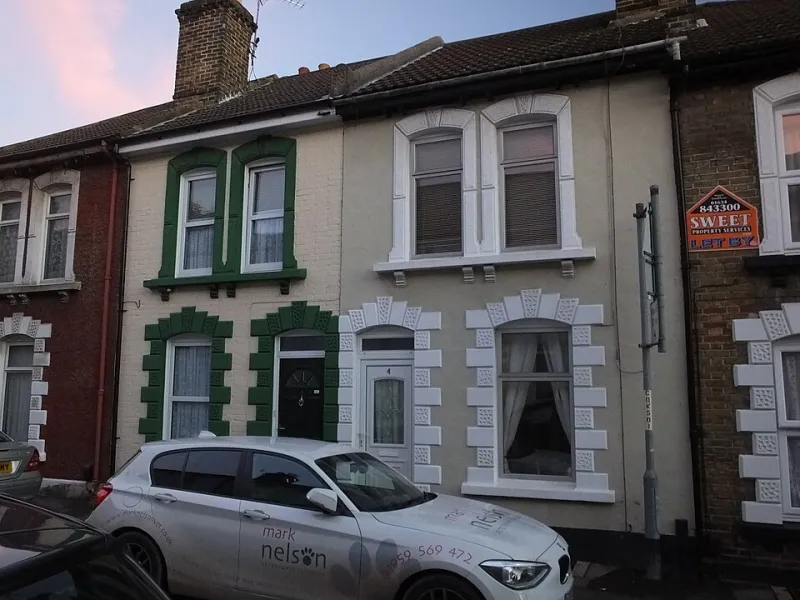
Not every house can hide its bin. In a Victorian terrace with a two-foot front garden, the bin may simply have to stand beside the door. In that case, make it look intentional: a matching bin and recycling box, a clean lid, a house number on the wall above, and a pot of evergreen rosemary at its side. A bin that is clean and upright reads as part of the household. A bin that is slumped against the railings reads as neglect.
If you live in a flat or a shared building, check what the management rules allow before fixing anything to the wall. Freestanding screens and pots are usually safer. And if the bin store is shared, a small laminated label inside the lid — “please return after collection” — is surprisingly effective.
The point is not perfection
The front of a UK home is a working space. Bins, bikes, boots and delivery boxes all pass through it. The goal is not a show-home facade with no evidence of life. It is a front that looks as though someone has thought about how the practical stuff fits. A bin with a proper place, a screen that matches the house, and a routine that brings it back in the same day will do more than a fake hedge ever could. Bin day will still happen. It just will not be the thing that lets the street down.