Reflected Gain: Where a Mirror Actually Earns Its Keep
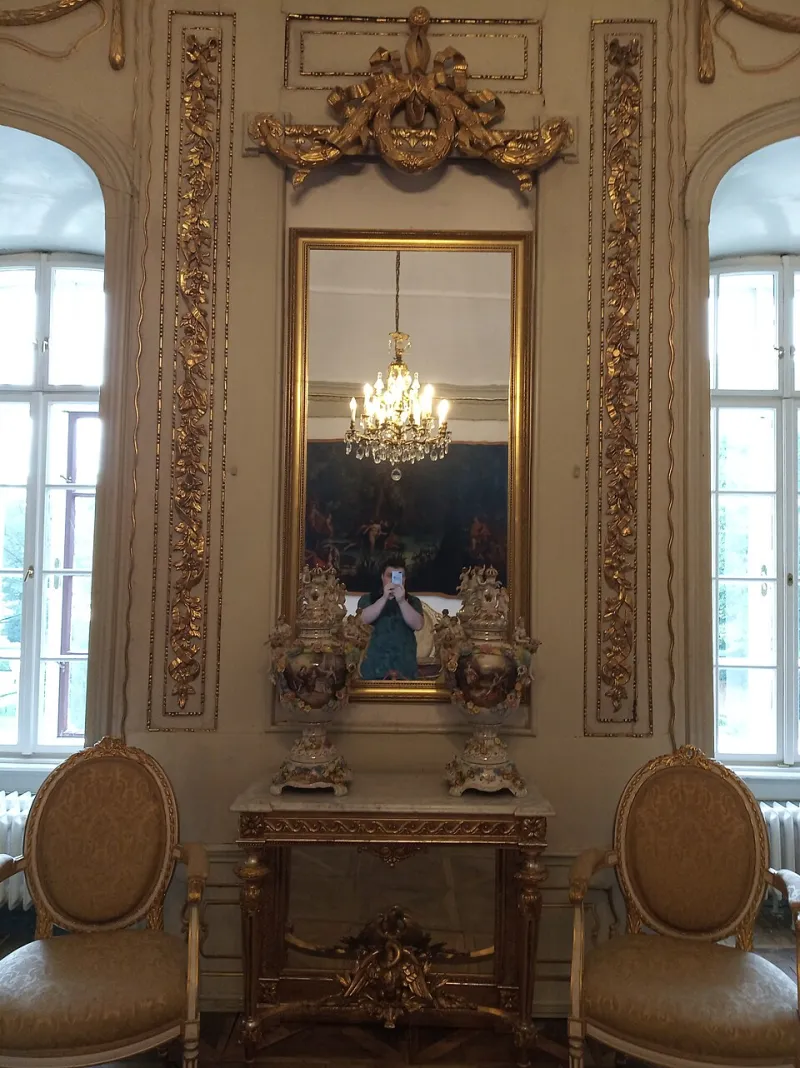
Photo: ZemplinTemplar, CC BY-SA 4.0, via Wikimedia Commons
There is a particular kind of mirror advice that has been repeated so often it has stopped meaning anything: mirrors make a room feel bigger. True, as far as it goes. But if you actually live in the house rather than photograph it for a listing, size isn't the problem. Light is. British houses have small windows, deep reveals, awkward hallways with no glazing at all and a north-facing back room that gets about forty minutes of usable daylight in December. Nothing you can buy for under a hundred pounds fixes that as efficiently as a decent mirror in the right place.
Stop thinking of it as decoration
A mirror is equipment. It has one job: take light from somewhere you have it and put it somewhere you don't. That means it needs something worth reflecting, and it needs to be aimed. The single most common mistake in UK homes is the mirror on the only blank wall in the room — the one facing nothing. It shows a stretch of magnolia, the back of a sofa and, if you're lucky, your own slightly startled face when you catch it. That isn't character. That's a hole in the wall with better marketing.
The one rule that does most of the work
Line the mirror up with a window. Not roughly, not in the general spirit of the thing — actually check it. Stand where you naturally pause: the bottom of the stairs, the kitchen doorway, the spot by the front door where the keys land. Look at the glass. If you can see a window, a window reveal or a glazed door in it, the mirror is earning its keep. If you can't, take it down and try the other wall.
A mirror wants to face the light across the room, not sit beside it at a grazing angle. Direct-ish reflection beats a sideways glance every time. It also helps to check the mirror after dark, because a mirror that catches a window beautifully at 11am can turn into a black rectangle at 6pm — or worse, a perfect view of your own hallway lit by one lamp, which is a genre of image nobody needs before bed.
Hallways and landings are where the real money is
Terraced houses, 1930s semis, any hall with a fanlight over the door and nothing else — this is the biggest win in the house. A tall mirror on the wall opposite the front door pulls that fanlight down the length of the corridor. Suddenly the walk from door to kitchen isn't happening in permanent dusk.
Landings are under-exploited for the same reason. There's usually a window at the turn of the stairs, and a mirror on the landing wall can catch that light and throw it along the upstairs corridor to the dark side where the airing cupboard lives. If you have a half-landing, measure it before you dismiss it; that small horizontal wall can do more for the upstairs than any amount of extra lamps.
One caution: avoid the classic front-door mirror hung so it reflects the letterbox and your own coat. It looks like a cloakroom afterthought and it shows you the worst-lit version of yourself every time you leave the house.
North-facing rooms need aiming, not enthusiasm
A mirror cannot conjure sunlight. What it can do is redistribute what little arrives. Opposite the window, it doubles the apparent size of the glazing and pushes light back into the centre of the room. On a side wall perpendicular to the window, it can bounce daylight along the length of a long, thin sitting room, which is often more useful. Try it propped before you drill; five minutes of moving it around will tell you more than any rule.
And please, retire the mirror over the fireplace as a default. It's often the darkest wall in the room, the chimney breast is usually busy already, and a big mirror above a mantel tends to reflect the opposite wall's clutter back at you at head height.
Frames: match the era, not the mood board
In a period house, a mirror is one of the few places where proper ornament still looks confident rather than borrowed. Gilt, dark stained pine, arched tops, bevelled edges, even a bit of foxing where the silvering has gone — all of it sits happily in a Victorian terrace or a Georgian flat. What rarely works is the pale, over-painted 'vintage' frame that reads as a craft-shop approximation of age.
In a modern or new-build home, go the other way. One large format, plainly framed, thin brass or blackened steel or polished frameless edge. Six small mirrors in a boxy hallway is a look; one tall one is a decision. Either way, scale matters more than style — an undersized mirror in a wide hall will always look apologetic.
Cheap ways in
A glazier will cut a frameless mirror to size for far less than a framed equivalent, and it can be fixed with mirror adhesive and clips for a crisp, architectural result. Reclamation yards, charity furniture shops and local auction houses turn up good frames regularly, and it costs nothing to have old glass replaced if the silvering is too far gone. Skip the self-adhesive mosaic tiles; they photograph well and disappoint in person.
The things that go wrong
- Mirror facing mirror. Two mirrors in eyeline create an infinity tunnel and a faint funfair atmosphere. Avoid.
- Mirror directly behind a lamp. You get the bulb twice and none of the room.
- Mirror reflecting the television. Nothing ruins a quiet bit of wall like a second, smaller EastEnders.
- Hanging everything at ceiling height. Centre a mirror at roughly eye level — around 1.5 to 1.6 metres to the middle — rather than treating it as a dado for the ceiling.
- Ignoring the wall. Hollow plasterboard needs proper anchors; a heavy mirror on a picture hook is a question of when, not if. In a listed building, think hard about fixing points before the drill comes out.
A last thought
Count the windows in your house. Now count how many of them you can see from where you sit in the evening. Every mirror is a chance to nudge that second number upwards — and unlike a new window, it doesn't need planning permission, scaffolding or a man called Dave with a van.