Standalone Charm: The Secondhand Dresser That Gives a Basic Kitchen Manners
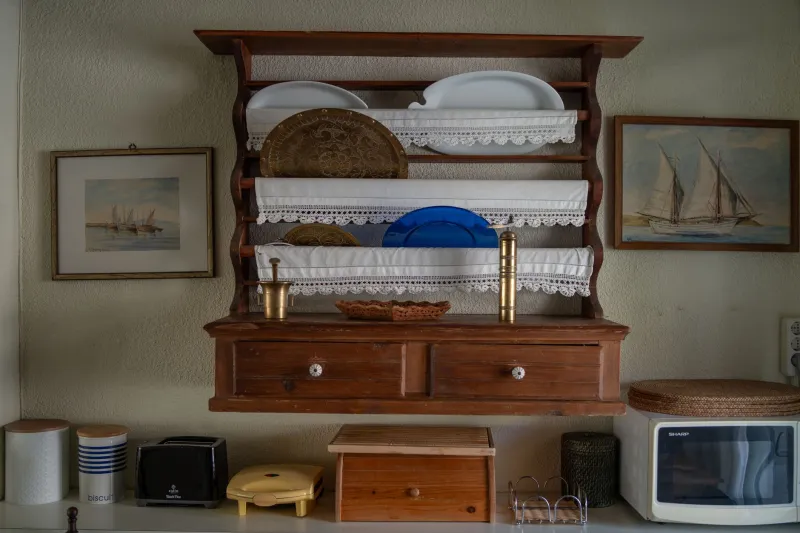
There is a particular look to a kitchen that has been fitted in one go: everything lines up, everything matches, and nothing has had the chance to become a story. It is efficient, sure. But efficiency is not the same as charm. And in a UK home where the budget does not stretch to ripping out the units, a freestanding dresser is one of the fastest ways to introduce a bit of period manners without summoning a builder.
The dresser is not a new idea. It is furniture, not cabinetry — the sort of thing that might have been bought for a cottage, handed down through a family, or picked up at a local auction when someone else was downsizing. That is exactly why it works. A fitted kitchen says the room was planned. A dresser says the room has lived.
Why freestanding beats another fitted cabinet
Fitted kitchens are brilliant at hiding things. They are less brilliant at giving a room a centre. A dresser does both jobs in a different way: it holds the everyday china, the cookbooks, the jars and the jugs, but it also creates a piece of architecture inside the room. It has legs, a back, a top, a silhouette. You notice it.
In a modern or builder-basic kitchen, that matters. If the room is all flat doors and uniform worktops, a dresser adds depth and a bit of wonk. If the kitchen is already period, a dresser reinforces what is there without pretending the fitted units are something they are not. It is a compromise that feels deliberate rather than apologetic.
The other advantage is cost. A secondhand dresser can be far cheaper than another run of bespoke cabinets, and it does not require you to touch the units you already have. You are not renovating. You are adding one good piece of furniture and letting it do the talking.
Scale first, style second
It is easy to fall for a dresser online and then discover it swallows the room. UK kitchens are often narrow, especially in terraces and cottages, so measure before you fall in love.
Start with the wall. How much width can you give without blocking a door, a window, a radiator or the route to the kettle? Then measure height. A tall dresser can make a low-ceilinged kitchen feel crowded, while a low, wide one can work beautifully under a window or on a long blank wall. Depth matters too: most dressers are around 40–50cm deep, which is fine in a larger kitchen but can be a trip hazard in a tight galley.
A useful trick is to mark the footprint on the floor and the outline on the wall with masking tape. Live with it for a day. You will quickly learn whether the dresser is going to feel like a friend or a filing cabinet. Also think about what sits opposite. If you already have tall fitted units on one side, a lower dresser opposite can balance the room. If the kitchen is very small, a narrow wall-mounted plate rack or a shallow open shelf may give you the same inherited feel without taking up floor space.
What to look for secondhand
Condition matters more than age. A solid pine or oak dresser with good joints is worth more than a prettier one held together by hope and chipboard. Check the back panel, the drawer runners, the feet and the joints where the frame meets the sides. A little movement is normal; a lot of wobble is not.
Look for signs of woodworm, especially in older pieces that have been stored in sheds or garages. Fresh frass — the fine dust the beetles leave behind — is a warning. Old holes with no dust are less alarming, but treat anything active before it comes into the house. Also check for damp smells, warped shelves and drawers that stick. A stuck drawer can often be fixed; a warped carcass is harder to love.
Original paint is not a problem. In fact, a bit of wear can be the whole point. But do check that the dresser has not been painted over damp or flaking wood, because you will inherit the mess. If the plate rack is missing, that is not necessarily a dealbreaker — a simple replacement rail can be added — but use it to negotiate.
Good places to look include Facebook Marketplace, eBay, local auction houses, charity furniture shops and architectural salvage yards. British Heart Foundation furniture shops often have solid pieces at sensible prices. Remember to factor in delivery or van hire; a cheap dresser in the next county is not cheap if it costs £80 to move.
Repair before you paint
Resist the urge to paint first and fix later. Clean the dresser with sugar soap and let it dry properly. Glue loose joints with wood glue and clamp them if you can. Wax drawer runners with a candle end or a little paraffin wax so they glide again. Replace missing handles only if the originals are truly beyond use; mismatched handles can look charming, but they need to look intentional rather than accidental.
If the paint is sound, you do not need to strip it. Key the surface lightly, prime where needed and use an eggshell or a dedicated furniture paint suitable for kitchens. Chalk paint can work, but in a kitchen it often needs a protective wax or lacquer, and near a hob or sink that can become a maintenance job. A soft off-white, a muted sage, a deep oxblood or a dusty blue all sit comfortably in UK homes. Painting the back panel a contrast colour is a small move that makes open shelves feel considered.
Leave the top unpainted if the wood is decent. A scrubbed or oiled wooden top will take more punishment than you think and will age better than a painted surface around the kettle and toaster.
Styling it like it was inherited
The goal is not a showroom display. It is the look of a dresser that has been quietly accumulating useful things for years. That means mismatched china, a few slightly faded plates, a jug used for flowers, a bowl for lemons, cookbooks with broken spines and a jar of something practical. Open shelves should hold what you actually use, not what you think a stylist would choose.
Plate racks are forgiving. Fill them with everyday plates rather than a full matching set, and leave a few gaps. A dresser that is crammed to the edges looks anxious; a dresser with a little breathing space looks confident. If you have inherited china that is too precious for daily use, mix one or two pieces among the ordinary stuff and keep the rest for best.
Worn wood is an asset. Do not sand every mark away. A few dents and water rings are evidence that the piece has done its job. And if the dresser is going to sit near a radiator or oven, keep an eye on how the paint or wax behaves; a little heat is normal, a lot of heat is not.
Finally, anchor it to the wall. Dressers are tall, and kitchens are busy. A simple anti-tip strap is cheap insurance, especially in a house with children or a dog that thinks it is a child. Once it is secure, step back. The room will not look renovated. It will look as though someone with a bit of sense and a Saturday to spare has given the kitchen some manners.