What to Do With a Chimney Breast That No Longer Burns
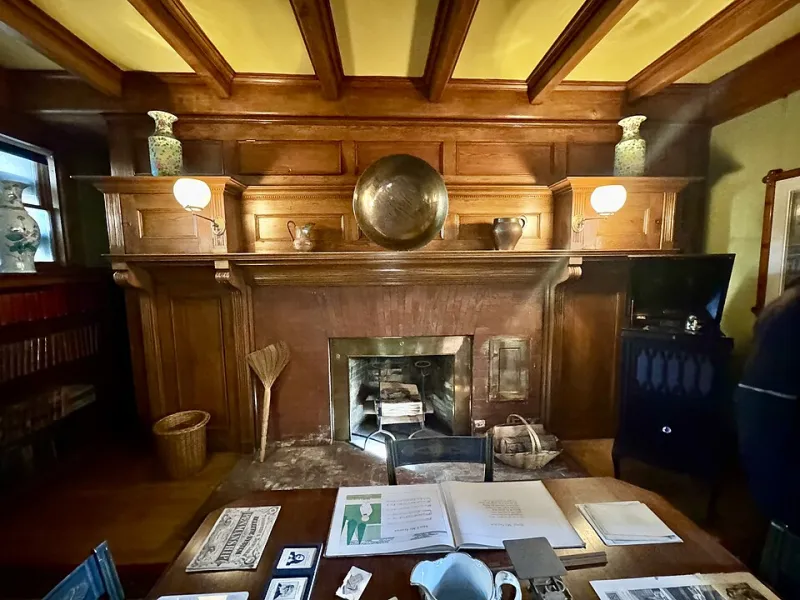
Photo: w_lemay, CC BY-SA 2.0, via Wikimedia Commons
Walk into any Victorian terrace in the country and you will find the same ghost: a chimney breast, often with a vent grille where the opening used to be, sometimes with a lump of board behind wallpaper where the surround was ripped out in the 1970s. The flue is capped, the pot is gone, and somebody has been meaning to deal with it since about 2011.
The instinct is usually to reinstate. That is also usually the wrong first question. Rebuilding a working flue is a project with a capital P — a liner, a register plate, Building Regulations notification, a sweep, possibly a new hearth and always a conversation with a Hetas-registered installer. If what you actually want is a room that feels like it has a centre, you can get most of the way there for a fraction of the money, and without lighting a single match.
What follows is about charm, not combustion. It assumes you have a redundant fireplace and no plans to change that.
First, establish what you are actually dealing with
Before buying anything, find out what is behind the board or the sealed-up opening. Sometimes there is a cast-iron insert sitting there intact, sometimes a rubble-filled void, occasionally a builder's bag of 1980s crisp packets. A sweep or a builder with a camera can tell you in an hour whether the breast is sound, whether the flue is vented at the top, and whether anything structural is going on.
Two things are worth knowing early. If the property is listed, or in a conservation area with an Article 4 direction, check with the local authority before you alter the exterior or the chimney stack. And if you share a flue or a stack with a neighbour, the party wall position applies, so a quiet word is sensible before anything is taken down.
The mantel question: reclaimed, replica, or simply none
The surround is where most reinstatement schemes go wrong, because the temptation is to buy something grander than the house. A modest 1930s semi does not need a hulking Victorian pine mantel with carved corbels; it wants something plainer and lower, closer to what was originally there.
Reclaimed is usually the most convincing route, and the cheapest way into genuinely old timber. Architectural salvage yards, reclamation auctions and the odd Facebook Marketplace listing will turn up pine surrounds for £80–£200 and cast-iron inserts for £150–£500, though you will need to add stripping, repairs and fitting. Reproduction surrounds in MDF or softwood start around £150 and can look perfectly decent in a modern room where the eye is not expecting 1900. Solid stone or marble is a different order of spending entirely.
The third option deserves more consideration than it gets: no surround at all. A simple plastered opening with a stone or slate hearth, a few logs stacked on iron firedogs and a good mirror above can be far more convincing in a small room than a surround that is slightly too big for the space.
Indicative 2026 cost bands: reclaimed pine surround £80–£250; reproduction timber surround £150–£500; reclaimed cast-iron insert £150–£700; fitting by a joiner £150–£400.
The hearth is the tell
People notice the hearth before they notice the mantel, because it is at foot level and it is where a fake begins to unravel. Reclaimed slate flags, York stone and quarry tiles all read correctly in period homes. Thin tile-effect panels and mirrored hearths do not, whatever the showroom lighting suggested.
If the original hearth survives under the carpet, lift a corner and see. Otherwise, a piece of reclaimed slate cut to size, bedded level and finished flush with the floor is a modest job with a big payoff. If the chimney opening is sealed and no fire will ever sit on it, you can also lift the hearth out altogether and run flooring straight through — a useful trick in small front rooms, and a perfectly legitimate one.
Cost bands: reclaimed slate hearth £60–£250; new-cut stone £200–£600; quarry tiles £30–£90 per square metre; fitting £80–£250.
Alcoves: shelves that do not shout
Alcoves either side of a chimney breast are the most useful awkward space in a period house and the most frequently ruined. Deep, chunky shelves crammed with ornaments make a room feel like a shop. Instead, use a single run of shelves on one side only, in a thickness that matches the skirting, painted the same colour as the wall so the whole thing recedes. Leave the other alcove for something with height — a tall cupboard, a slim desk, a lamp on a small table.
If you are boxing in a redundant breast to create a media wall, be aware that this is the fastest route to a fake-feature look. Floating shelves and a television in a plasterboard void can be handsome in a modern flat, but in a Victorian terrace they usually fight the room. Keep the breast, keep the opening, and let the room do the work.
Ventilation, and why a sealed breast behaves badly
Here is the unglamorous part. A chimney breast that has been sealed at the top and bottom traps damp air, and that damp finds its way into plaster, skirtings and the party wall. The standard remedy is a vent: a simple hit-and-miss grille low in the breast, or a vented terminal at the top of the stack, so air can move through.
If you have a grille already, do not box over it because it spoils the look. Instead, choose a cast-iron or brass grille that goes with the room and treat it as trim rather than an eyesore. Have the flue swept before sealing anything, too — soot is corrosive and a distant chimney fire is not something to discover by accident.
Hiding the cable spaghetti
If a television, a lamp or a soundbar is going to live on or near the breast, plan the cable route before the plastering, not after. A short chase behind the skirting, a brush plate at each end and a spur from an existing socket usually does it. Chasing a chimney breast itself is fine where the flue is redundant, but check with your electrician first and keep any new circuit on RCD protection. Surface conduit painted to match the wall is the honest fallback and looks far better than a bundle of white flex looped around the mantel.
Room by room: the short version
Living room. Keep the opening, use a reclaimed surround or none at all, stack logs and put a mirror or a piece of art above. This is the room that most rewards restraint.
Dining room. Alcove shelving on both sides works here because symmetry suits the room, and a low sideboard in front of the breast reads as furniture rather than a feature.
Bedroom. A sealed breast is an opportunity: paint it out in the wall colour, fit a slim shelf at picture-rail height, and use the alcoves for a compact wardrobe run.
Hallway. Small, cold and awkward. Vent it, box it flush, and let the stair be the star.
Kitchen. Only worth reinstating if you genuinely intend to cook on it. Otherwise a sealed, vented breast with a shelf above the hob is the sensible outcome.
The test of a convincing fake
A fireplace that does not work is fine. A fireplace that pretends to work is not. Skip the electric flame effect in a period surround, skip the artificial coals and the blinking embers. Logs, firedogs, a candle cluster at the right height, or simply an empty opening with a good hearth all persuade the eye far more readily than anything with a plug on it.
Get the proportions, the hearth and the ventilation right, and nobody will ask whether it burns. They will just assume it always looked like that.