Tuesday Is Reason Enough: Letting the Good Front Room Off the Hook

Photo: Diliff / edit by Waugsberg (attempt to correct stitching problems), CC BY 2.5, via Wikimedia Commons
Most UK houses have a room that is kept for best. It has the good curtains, the lamp that actually works, and a fireplace that has never quite recovered from the last time someone lit a fire in it. The rest of daily life happens in the back room, around a telly, a drying rack and a pile of post. The front room waits for guests who rarely arrive, and when they do, everyone sits awkwardly on chairs that are too upright.
This is not a scolding. Saving a room for best is a very understandable British habit. It comes from a time when the front room was the public face of the house, the place where visitors were received and impressions were managed. But in 2026, most of us do not receive visitors in that formal way. We receive deliveries, children, dogs, muddy boots and friends who come round for a takeaway. The good room is missing all of it. It is time to let it off the hook.
The room that only knows Christmas
You know the pattern. The front room is opened for Christmas, maybe for a birthday, possibly for a wake. The rest of the year it is a museum of good intentions. The cushions are plumped. The books are arranged. The carpet has no footpath worn into it. It looks lovely and entirely uninhabited, which is the opposite of character. Character comes from use: from a chair that has a favourite side, a rug that has seen a few spills, a shelf where the objects have been moved around by people who actually sit there.
The good room does not need a renovation to become useful. It needs a reason to be used on an ordinary Tuesday. That might be as simple as moving a lamp, clearing a chair of dry cleaning, and sitting in there with a cup of tea for twenty minutes. The room will tell you what is wrong. Perhaps the sofa is too far from the fireplace. Perhaps the only light is a ceiling pendant that makes everyone look like they are being interviewed. Perhaps there is nowhere to put a mug down. Those are not structural problems. They are styling problems, and they are fixable.
Start with a Tuesday test
Before you buy anything, spend a week using the room as if it were the back room. Sit in it. Read in it. Put a plate of toast on the table. Let the dog in. Notice what you avoid. If you keep drifting back to the kitchen, ask why. Is it warmer? Is the light better? Is there somewhere comfortable to put your feet? The answers will point to the practical moves that matter.
A good front room needs at least two places to sit that are not facing a television. That sounds obvious, but many best rooms have a sofa arranged like a waiting area and a single armchair that nobody claims. Pull the sofa away from the wall if you can. Angle it towards the fireplace or the window. Bring in a small side table or a nest of tables. A room feels more generous when the furniture suggests conversation rather than a queue.
Furniture that expects company
You do not need a new suite. You need a better arrangement. Try swapping a piece from the back room, even temporarily. A small armchair, a footstool, a lamp or a rug can change the whole mood. If the room is narrow, use a slim console behind the sofa instead of a bulky sideboard. If it is long, create two zones: a seating area near the window and a smaller reading corner at the other end. A rug can mark the boundary without a wall.
The key is to leave a clear path to the window and the fireplace. Rooms feel formal when you have to sidle around furniture. They feel welcoming when you can walk in, put a bag down and find a seat without a committee meeting. Leave a little space for people to be slightly untidy. A basket for blankets, a tray for remotes, a bowl for keys: these small landing places stop the good room from becoming a no-go zone.
Light for living, not for show
The single most effective change in most front rooms is to stop relying on the ceiling light. A pendant is fine for cleaning, but it is not flattering for an evening. Use two or three lamps at different heights: a floor lamp in a corner, a table lamp beside the sofa, a small lamp on a shelf or console. Choose warm bulbs, around 2700K, and put them on a dimmer if you can. If you cannot, use smart plugs or lamps with their own switches.
Lighting should make the room feel smaller in a good way, as if it has drawn its shoulders in for the evening. A lamp in the window also makes the house look inhabited from the street, which is a quiet bit of curb appeal for free. Just avoid the cool white glow that makes a living room look like a dentist's waiting area. Warm light, low down, is the goal.
Textiles that survive real life
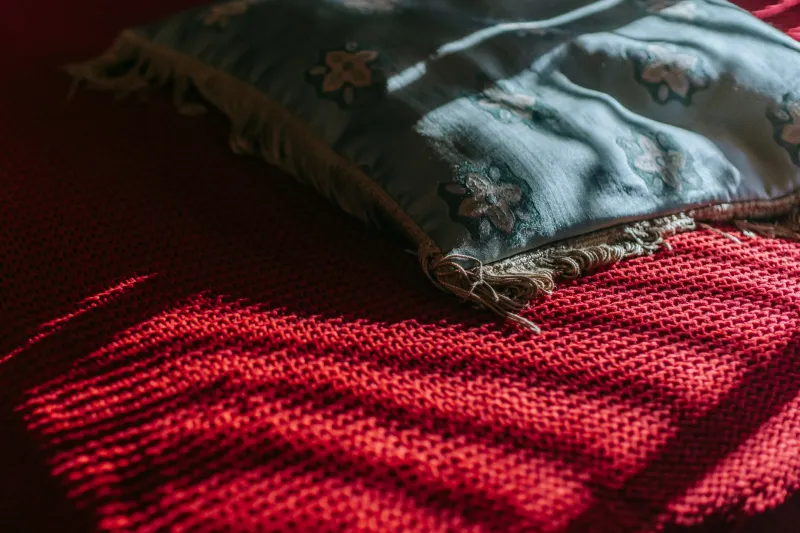
The best room often has the most delicate textiles, which is exactly why nobody uses it. If you want the room to work on a Tuesday, choose things that can be washed, brushed or forgiven. Cotton slipcovers, wool throws, jute or flatweave rugs, linen cushions and washable curtains are all more forgiving than pale velvet and silk. You can still have a beautiful room. It just needs to be a room that expects a cup of tea to go over.
A rug is worth the effort because it anchors the seating and warms the floor. If the carpet is elderly, a large rug can cover the worn path without pretending the carpet is new. If the floorboards are good, a rug gives you permission to walk on them. Add a basket for throws and a couple of cushions that are comfortable rather than decorative. The test is simple: can someone put their feet up without being told off?
Display that is not a shrine
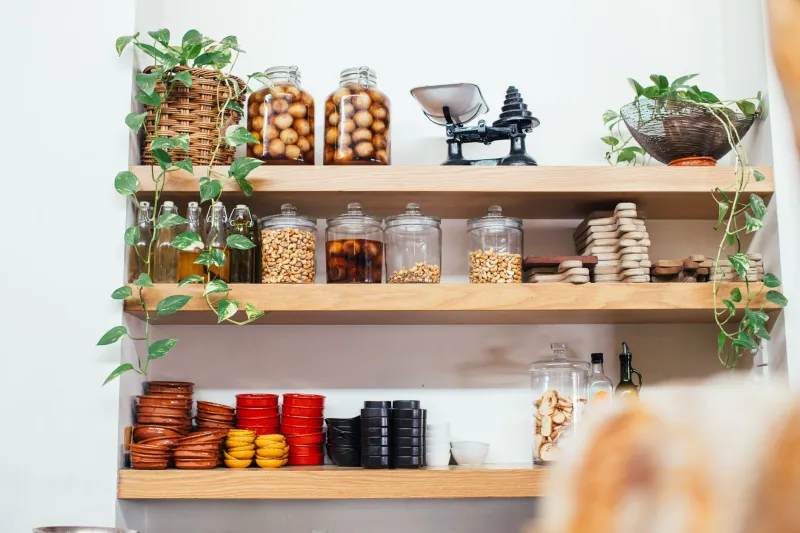
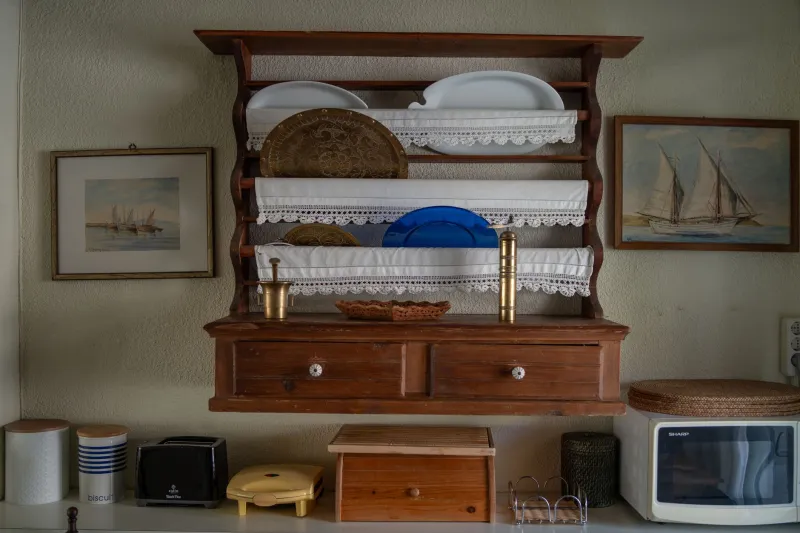
The front room is often where good things go to be looked at rather than used. China, photographs, ornaments, the clock that does not work. Some of that is lovely. Too much of it turns the room into a display case. Edit it. Choose a few things that mean something and give them space. Rotate the rest. A shelf with six considered objects will always beat a cabinet packed with thirty.
Books are the easiest way to make a good room feel lived in. They do not need to be arranged by colour. A stack of magazines, a bowl of fruit, a plant that is actually alive, a child's drawing on the mantelpiece: these are the things that make a room feel like it belongs to someone. If you have a fireplace that no longer burns, use it. A vase of branches, a cluster of candles, a basket of logs for the look of the thing. Just do not let it become the place where the ironing board lives.
Let it get slightly wrong
The irony of the best room is that it often looks less charming than the back room because it has been protected from life. Character is not the same as perfection. It is the worn patch on the arm of a chair, the slightly crooked picture, the lamp that is the wrong shape but the right light. You cannot style that in. You can only allow it.
So open the door on a Tuesday. Put the kettle on. Sit down. Let the room earn its keep. It will look better for it, and so will the rest of the house.