The Working Room: Giving a Utility Space Some Quiet Intention
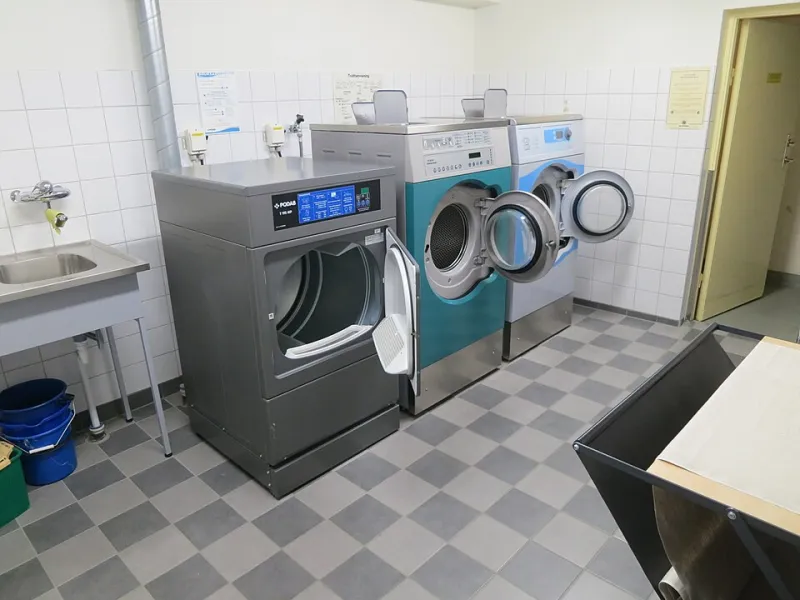
Photo: R. Henrik Nilsson, CC BY 4.0, via Wikimedia Commons
Utility rooms have a reputation problem. They are where the washing machine lives, where the ironing board leans, where the dog towel dries and where every half-used bottle of floor cleaner goes to congregate. That is fine. It is a working room. But working does not have to mean forgotten, and a service space can carry real charm when it is given intention rather than just shelving.
Start with the jobs, not the look
Before you buy a single basket, write down what the room actually does. Laundry, obviously. Drying, probably. Somewhere to drop boots and coats if it opens to the garden. Cleaning kit, pet bowls, the overflow pantry, the recycling that never quite makes it outside. A utility room is often doing four jobs in the space of one small kitchen. Naming them is the first step to stopping them from spreading.
Once you know the jobs, give each one a zone. It does not need to be grand. A metre of worktop for folding, a wall for drying, a tall cupboard for the vacuum and mop, a tray by the door for boots. The point is that everything has a home, so the room stops being a holding pen for things that have nowhere else to go.
Make storage boring in the best way
Utility storage should be dependable, not decorative. That means closed storage wherever possible: a tall cabinet, a curtain across open shelving, opaque boxes on the top shelf, a slim cupboard around the boiler if it is safe and accessible. Uniform containers help, but only after you have measured the shelves. Buying matching baskets first is how a utility room ends up looking tidy in a photograph and chaotic in real life.
Use the wall above the appliances. A narrow shelf over the washing machine can hold detergent, stain remover and a small lamp. A rail with hooks takes brushes and dusters. A pull-out bin keeps recycling out of sight. If the room is also a service corner in a kitchen, consider a curtain in a durable linen or cotton mix. It softens the hard edges, hides the clutter and costs far less than cabinetry.
Durable finishes with a bit of backbone
This is not the room for pale carpet or delicate wallpaper. But durable does not have to mean clinical. Existing quarry tiles can be cleaned and sealed. Painted floorboards in a hard-wearing porch paint are forgiving and characterful. Sheet vinyl has come a long way and a subtle pattern hides scuffs better than plain grey. On the walls, a wipeable eggshell in a colour you actually like will do more for the room than a feature wall ever could.
If the house has period bones, lean into them gently. Half-height tongue-and-groove panelling behind a utility sink looks intentional and protects the plaster. A splashback made from an offcut of worktop or a few plain tiles is practical without being precious. Paint the cabinets the same colour as the kitchen or the hall, repeat the same cupboard handles, and the utility stops feeling like a separate outpost. That repetition is the quiet trick that ties service spaces to the rest of the house.
Light it like you mean to be in there
Most utility rooms are lit by one harsh ceiling bulb. That is why they feel like cupboards. Layer the light instead. A warm 2700K strip under a shelf, a small wall light over the sink, a rechargeable spot on the worktop, a motion sensor for late-night trips with the laundry basket. Warm light makes durable finishes look less institutional and more like a room you chose.
Task lighting matters most over the folding area and the sink. If you only do one thing, swap a cool white bulb for a warm one and add an under-cabinet strip. It is a small change that makes the room feel considered rather than utility-grade.
Give drying a proper place
Laundry has to dry somewhere, and pretending otherwise is how utility rooms become obstacle courses. If there is ceiling height, a pulley airer is a period-appropriate and genuinely useful solution. A heated airer or a dehumidifier can handle the rest. Give drying a dedicated wall or zone, keep the walkway clear, and ventilate properly. In a UK climate, damp is the enemy of charm. An extractor fan or a window that actually opens is not a luxury in this room.
The boot drop and the back door
If the utility doubles as a back-door entrance, treat the threshold like a tiny hallway. A sturdy mat, a boot tray, a bench or stool, a peg rail at the right height and a shelf for keys and post. A basket per person can work if the room is big enough; if not, one deep tray for everyone is better than a row of tidy-looking baskets that overflow by Tuesday.
This is also where a little trim earns its keep. A piece of skirting, a painted peg rail, a hook in a warm metal finish. Small details signal that the room has been thought about, even if the thought was mostly about muddy boots.
Tie it back to the house
The easiest way to make a utility room feel intentional is to repeat something from the rest of the house. The same wall colour as the hall. The same cabinet colour as the kitchen. The same door furniture. A roll of wallpaper left over from another room, used inside a cupboard. None of this requires moving plumbing or starting a renovation. It simply asks the room to speak the same language as its neighbours.
A room that earns its keep
A utility room will never be the star of the house tour, and it does not need to be. But it can be calm, warm and quietly well judged. Give it durable finishes, hidden storage, proper task light and a place for the wet coat and the muddy boot. Then let it get on with the work. That is what charm looks like in a service space: not fuss, but intention.